Ghost mannequin photography: the 2026 guide for apparel brands
Ghost mannequin photography puts your garment on a mannequin, then edits the mannequin out, leaving the clothing floating with a natural 3D shape. It is the workhorse of apparel ecommerce: a step up from flat lays without paying for models. In the US it runs anywhere from $0.49 per image for editing-only services to $75 per image at full-service studios. This guide covers how the effect is made, what it really costs, where it falls short, and the AI route that is replacing it.
What is the ghost mannequin effect?
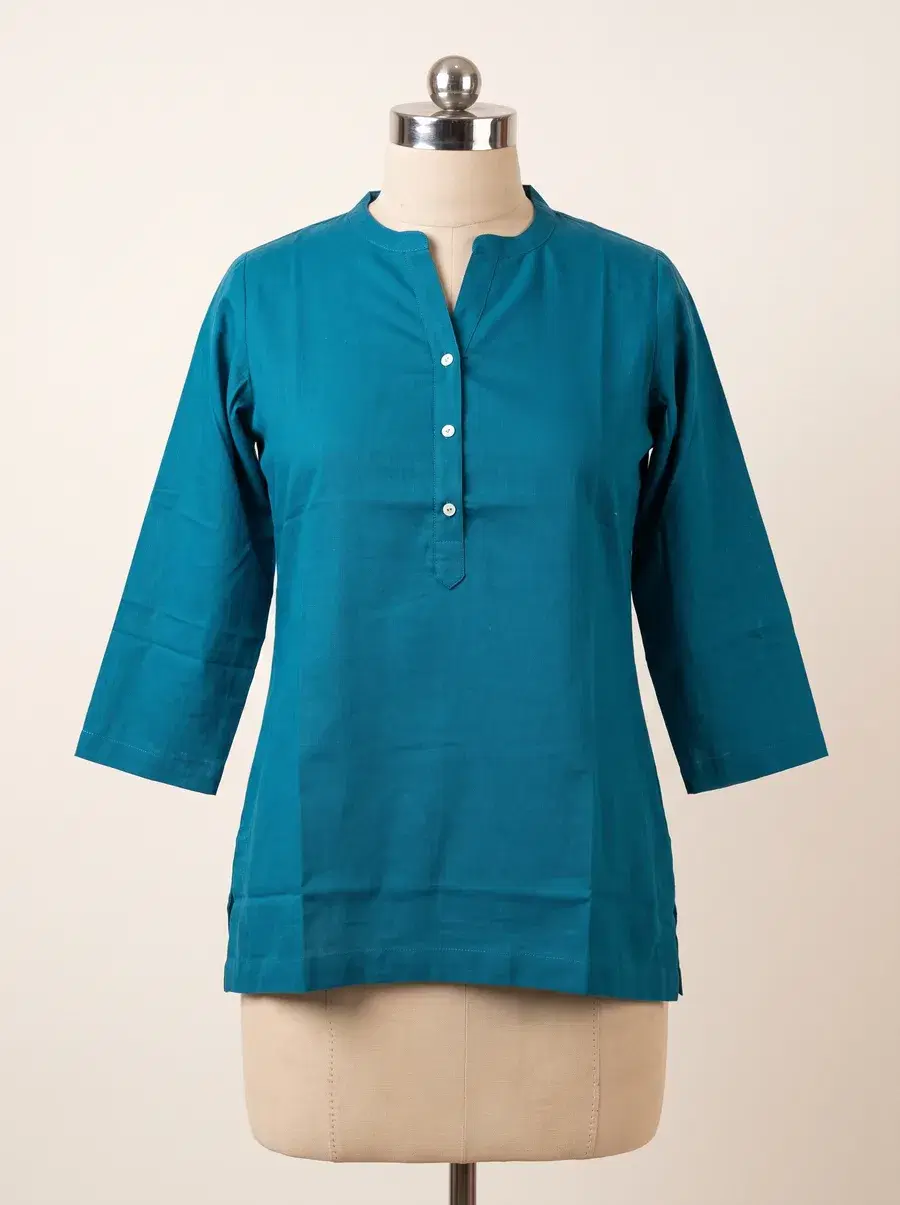
Also called invisible mannequin, hollow man, or 3D mannequin photography, the technique combines two or more photos: the garment on a mannequin, and a separate shot of the inside of the neckline or cuffs. An editor masks out the mannequin and composites the interior view into the neck opening, so the garment appears worn by an invisible body. Shoppers get shape and structure that a flat lay cannot show, on the clean white background marketplaces like Amazon require.
How ghost mannequin photography works
- Prep the garment. Steam or iron it, then fit it on the mannequin, pinning from behind for a clean silhouette.
- Shoot the main angles. Front, back and sides on a seamless background with even lighting, keeping camera position identical across shots.
- Shoot the interior. The garment inside out or draped to expose the inner neckline and hems that the mannequin was covering.
- Composite in post. An editor removes the mannequin, layers the interior shot into the neck opening, and cleans up edges, wrinkles and color.
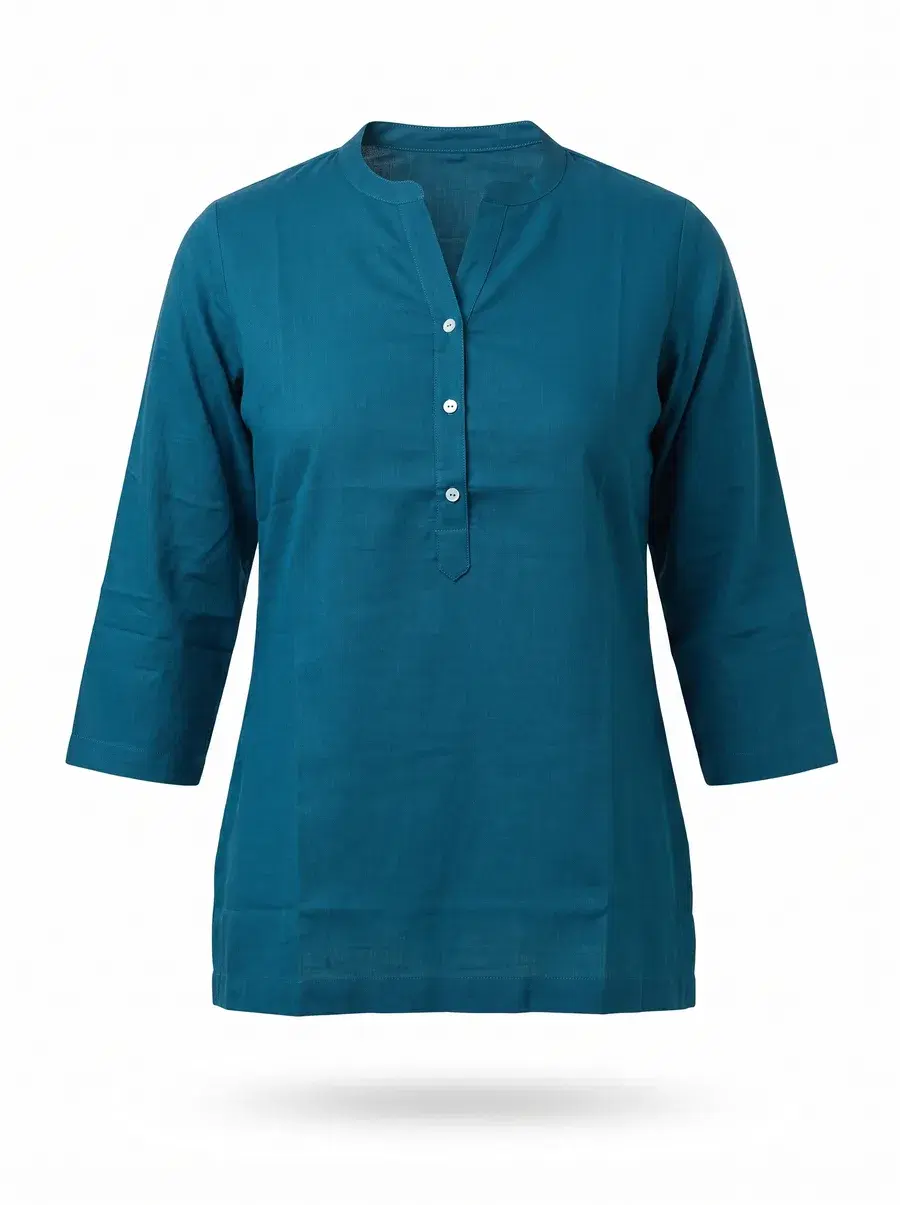
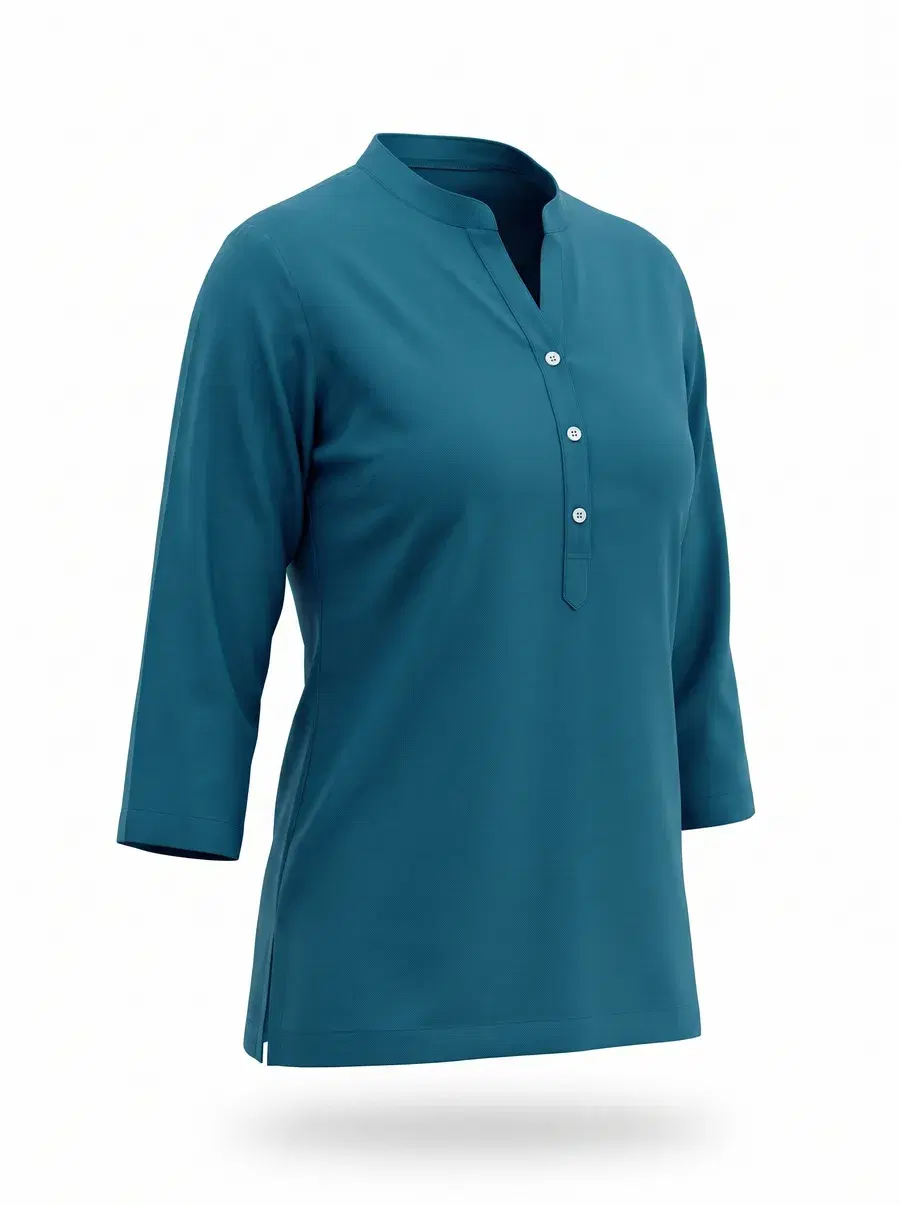
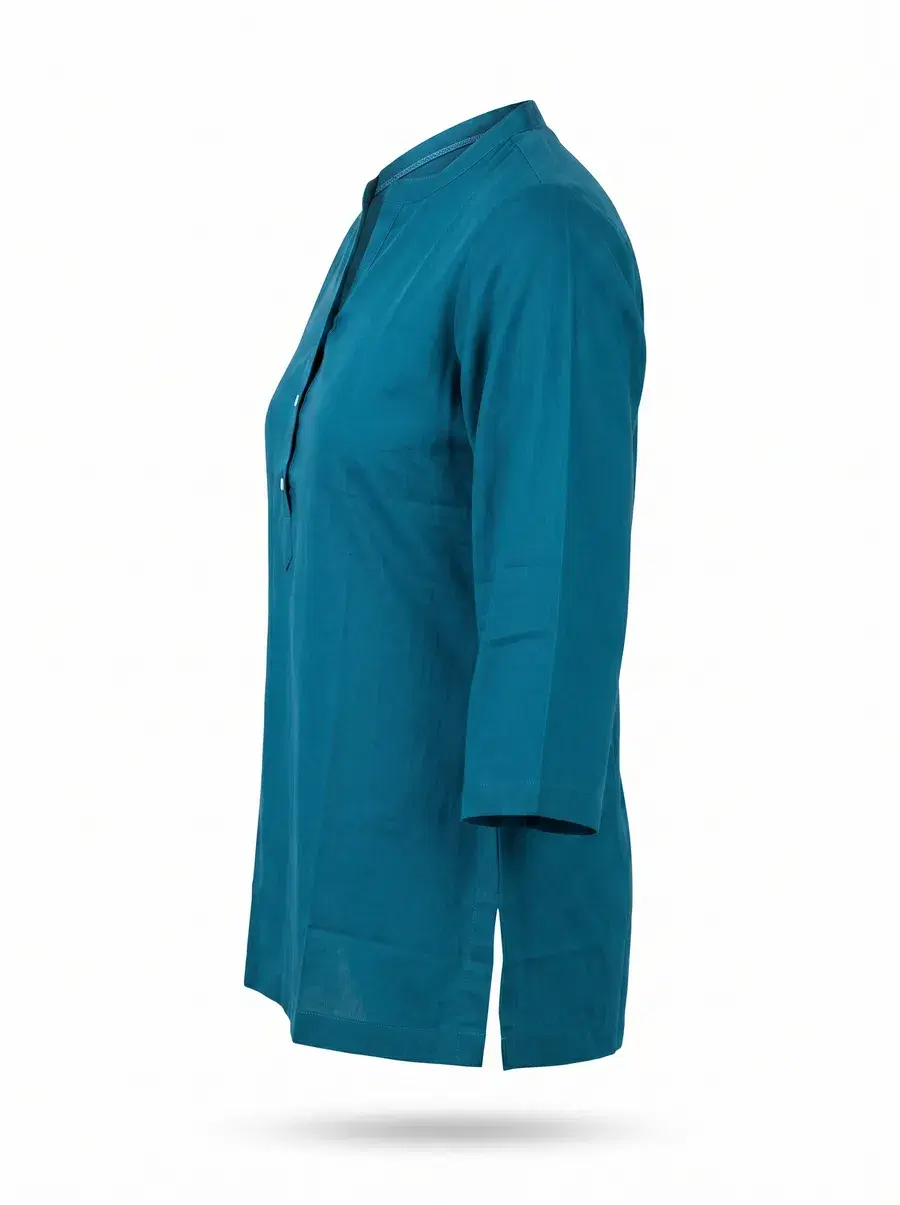
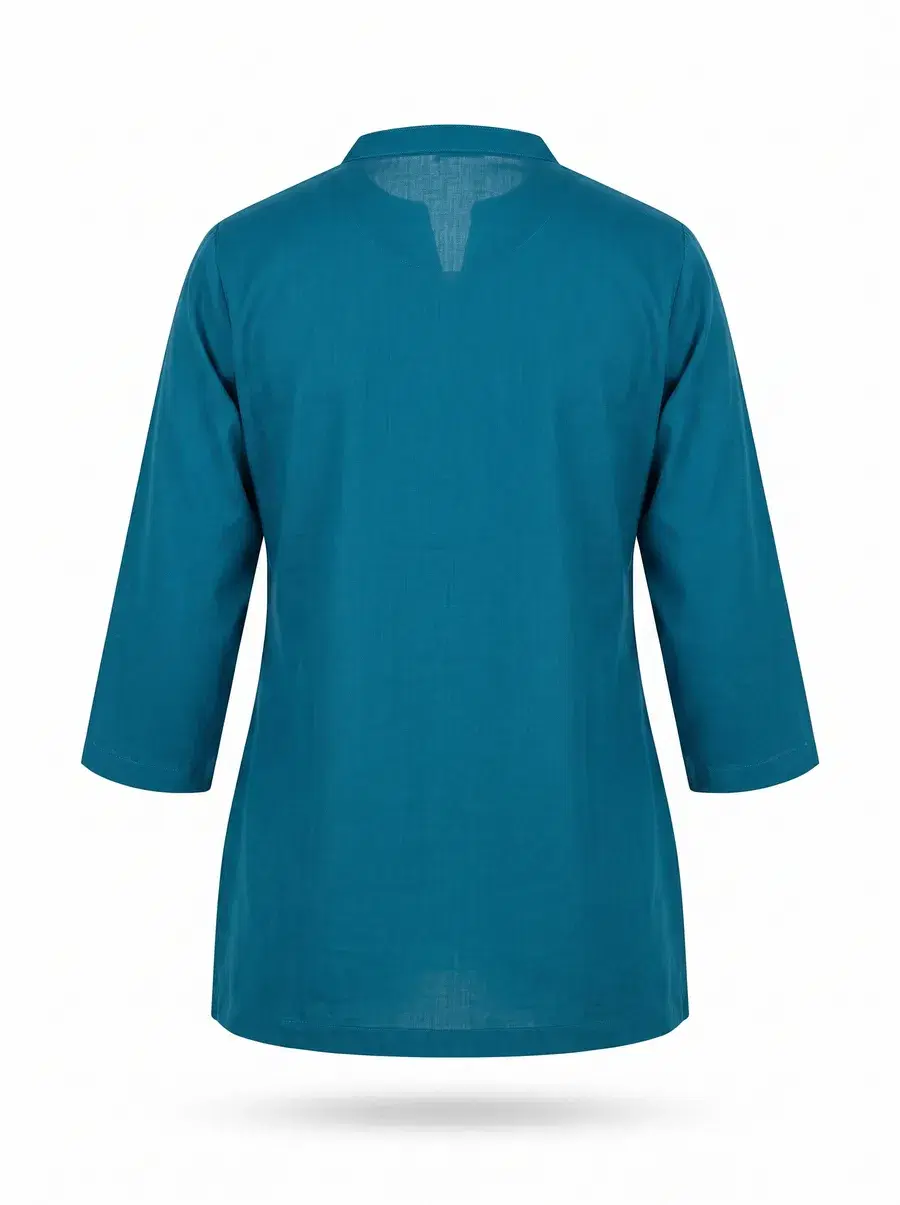
Steps one to three repeat for every garment and every colorway, which is where the hours go. A single style in six colors is six steaming sessions, six pinning jobs and six editing passes.
Ghost mannequin photography costs in the US
| Route | Typical price | What you get |
|---|---|---|
| Editing only (you shoot) | $0.49–1.79/image basic; $1.50–7.50 for complex compositing | Neck-joint edit of your own photos; 24–72 hr turnaround per batch |
| Full-service US studio | $25–75/image; multi-angle sets from $55/garment | Shoot plus editing; you ship every garment to the studio |
| In-house setup | $100–300 mannequin plus camera, lighting and editing time | Full control; every colorway still steamed, shot and edited by you |
| GenWear AI on-model | About $0.60 per finished image (billed in INR, roughly ₹50) | On-model photos generated from the product shots you already have |
Volume pricing brings editing rates down for big catalogs, but the structure never changes: every SKU and every colorway needs its own physical sample, its own shoot and its own edit, and batches typically come back from editors in one to three days.
Where ghost mannequin shots fall short
- No fit context.A hollow garment shows shape, not how fabric drapes on shoulders or where a hem lands. Around 22% of ecommerce returns come back marked “looked different than expected”.
- Neck-joint artifacts. Rushed edits leave floating collars, hard edges and warped interiors that read as cheap in a US marketplace grid.
- The hollow look is everywhere. It signals catalog, not brand. On-model thumbnails stand out against a page of floating shirts.
- It converts less than on-model. On-model photos convert 20 to 30% better than ghost mannequin shots. The full data is in our ghost mannequin vs AI model comparison.
The AI alternative: on-model photos from the same shots
Here is the part that changes the math. The mannequin shot you already take is exactly what GenWear needs as input: upload it, pick a model, pose and scene, and generate on-model photos with the garment kept pixel-accurate, at about $0.60 per finished image. No neck-joint editing, no artifacts, and the result shows real fit instead of a hollow shell. Sell a style in six colors? Color swap generates the other five colorways from one shoot, and the whole flow takes minutes, not shipping cycles.
How to generate ghost mannequin shots in GenWear
And if you want the classic ghost mannequin look itself, you do not need the mannequin workflow at all. In GenWear, ghost mannequin is a pose. Here is the whole flow, from a phone shot to a finished image:
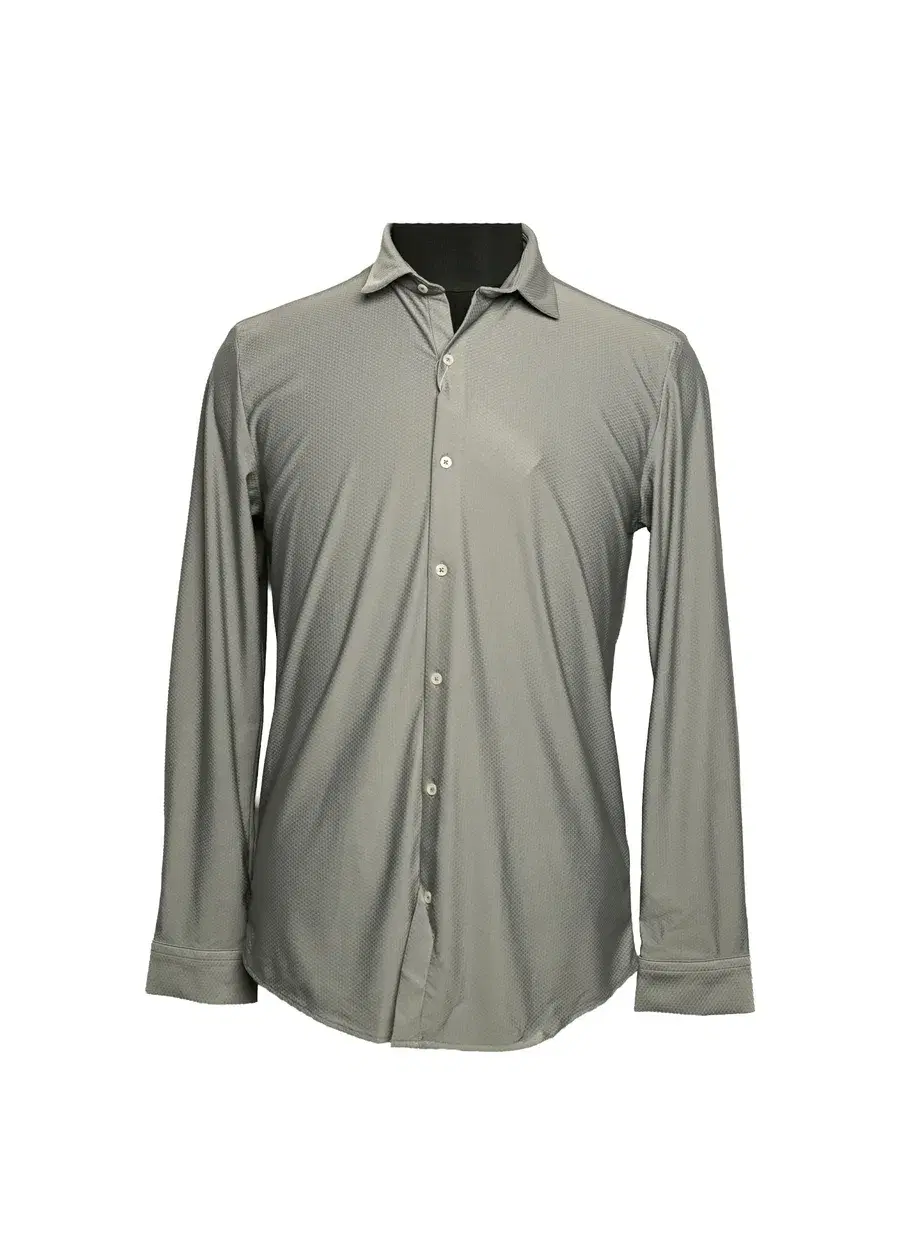
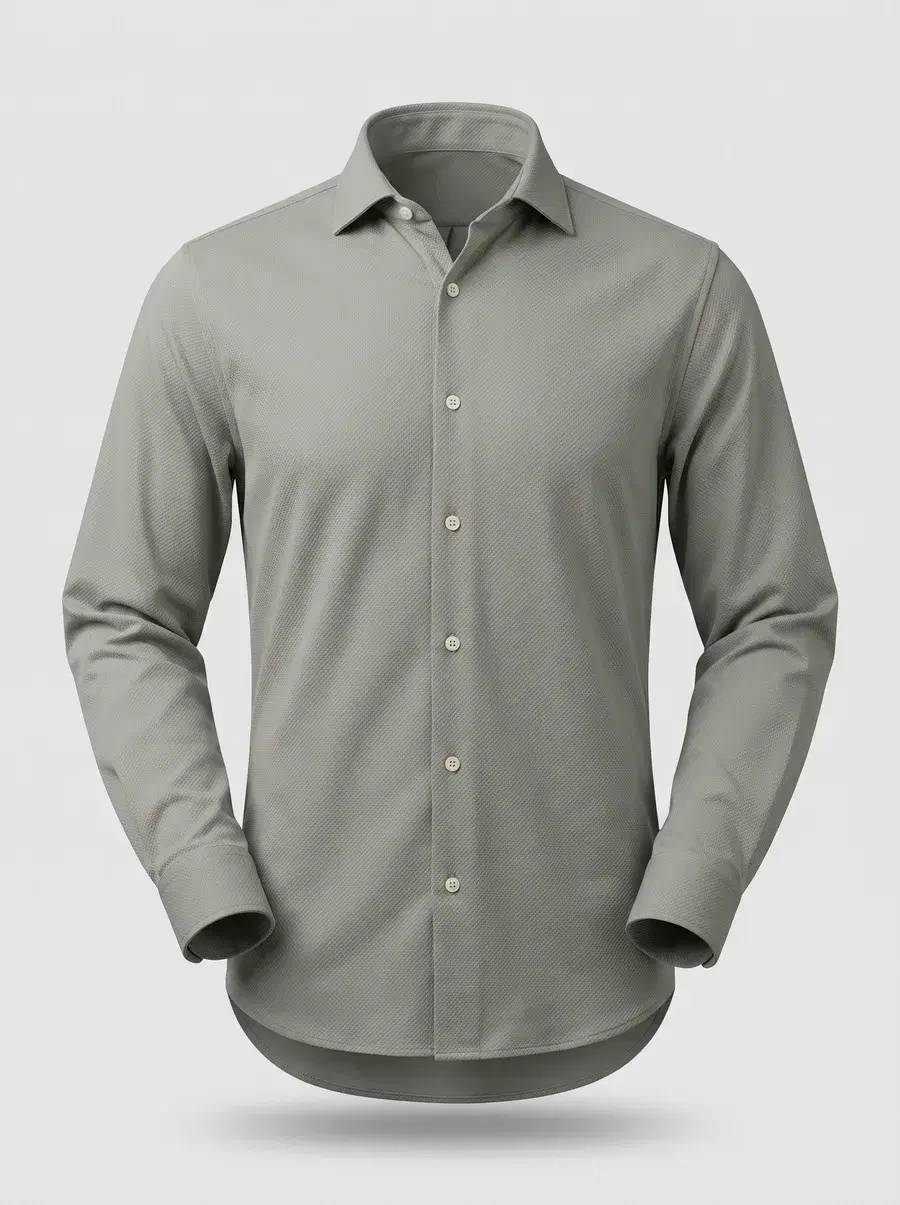
- Create a photoshoot. In the studio, hit Create Photoshoot and set your aspect ratio, resolution, segment and garment category.
- Upload your garment. Any clear photo works, including a phone shot of the garment on a mannequin or a flat lay.
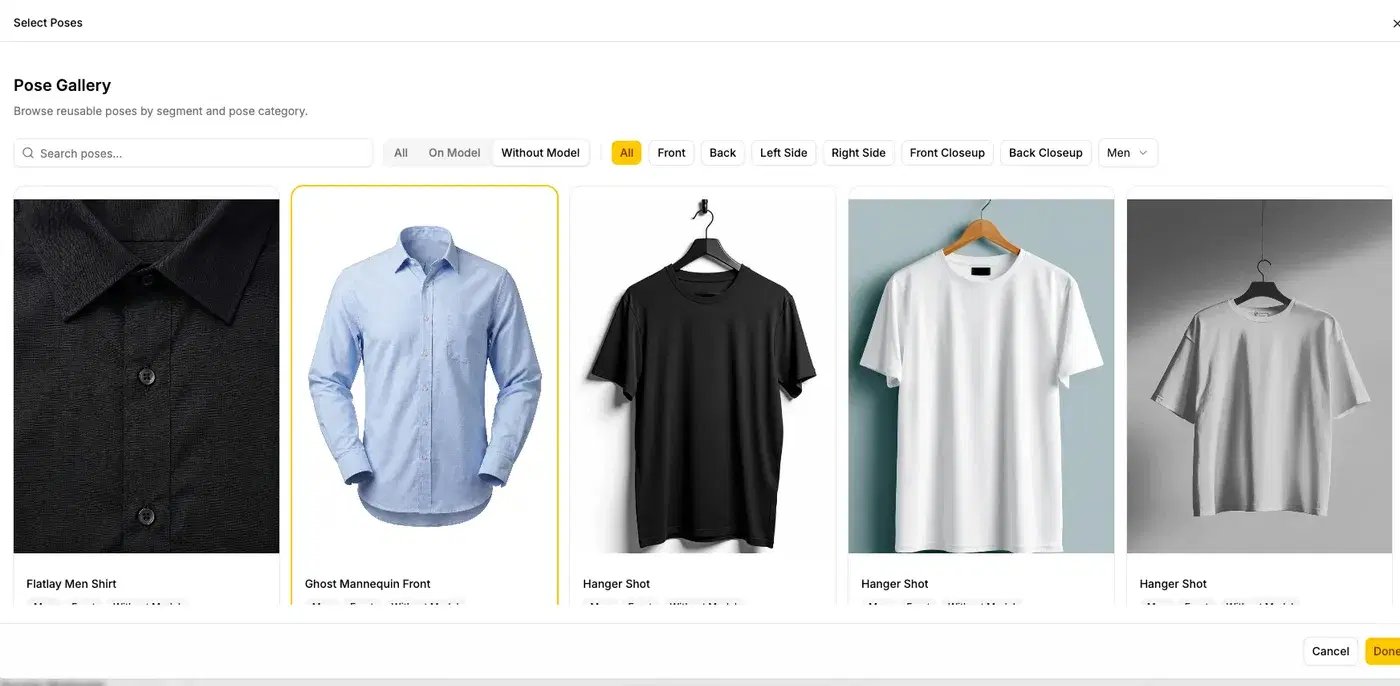
- Pick the Ghost Mannequin pose. In the pose gallery, filter by Without Model and select Ghost Mannequin Front. No model persona is needed for without-model poses. Flat lay and hanger shots live here too.
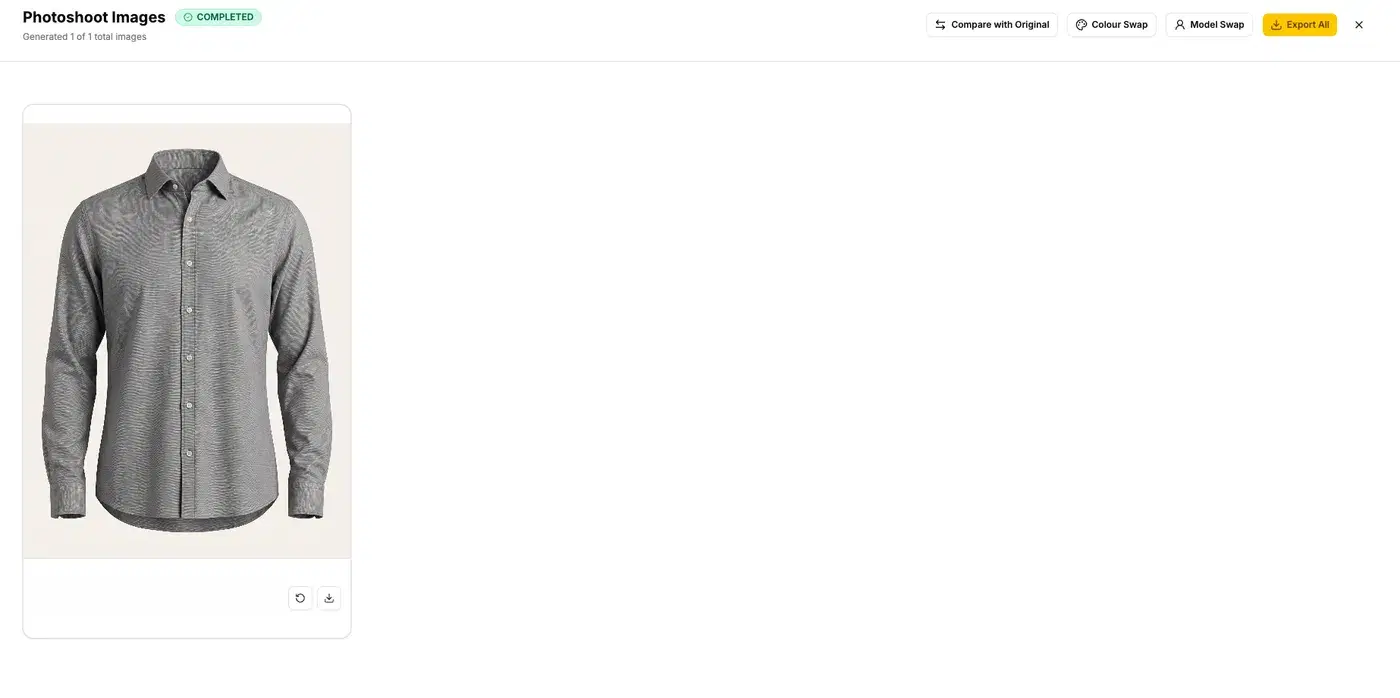
- Choose a background and generate. Studio White gets you marketplace-ready. A 2K image runs 10 credits, about $0.60.
- Export, or keep going. From the same result you can run Color Swap for the other colorways or Model Swap to see it on a model.
Try it with a mannequin shot you already have. Every new account gets 120 free credits. That covers your first two on-model shoots, no card, no commitment.
Generate your first shoot freeFrequently asked questions
What is ghost mannequin photography?
Ghost mannequin photography, also called invisible mannequin or hollow man photography, shoots a garment on a mannequin and then removes the mannequin in post-production. A second shot of the garment's inside neck is composited in, so the finished image shows the garment holding a 3D shape on a clean background with no model and no mannequin visible.
How much does ghost mannequin photography cost in the US?
Editing-only services start around $0.49 to $1.79 per image for basic garments, rising to $1.50 to $7.50 for complex multi-layer compositing. Full-service US studios that shoot and edit charge $25 to $75 per image, and multi-angle sets typically run $55 or more per garment.
What equipment do you need for ghost mannequin photography?
A torso mannequin (usually $100 to $300), a camera, two or more lights with diffusion, a seamless backdrop, and photo editing software for the neck-joint compositing. You also need every colorway of every garment physically on hand, plus the time to steam, pin, shoot and edit each one.
Can AI generate ghost mannequin shots?
Yes. In GenWear, ghost mannequin is simply a pose option: upload your garment photo, pick the Ghost Mannequin pose from the Without Model section of the pose gallery, choose a background, and generate. A 2K image costs 10 credits, about $0.60, with no mannequin, studio or neck-joint editing involved, and the same result can be color swapped or put on a model afterwards.
Is ghost mannequin photography better than on-model photography?
Ghost mannequin images outperform flat lays, but on-model photos convert 20 to 30% better than ghost mannequin shots because shoppers can judge fit, drape and styling on a real body. Many brands now shoot ghost mannequin style once and use AI to generate the on-model versions.